
- About
- News
- Research
- Products
- Product archive
- Applications
- Support
- Surplus
- По-русски
- Eesti keeles
This page outlines our areas of interest in applying computer vision to the monitoring of animal behaviour, welfare and condition. The common premise is that many early indicators of stress, discomfort or disease are behavioural: changes in activity, posture, feeding, spatial distribution or gait often precede clinical signs.
Continuous visual observation by staff is costly and limited in duration. Camera-based monitoring, by contrast, can in principle run around the clock and over the whole production or life cycle. It also produces quantitative time series that can be compared with an individual or group baseline.
The directions described below cover poultry, horses, zoo animals and pigs. They differ in maturity, from conceptual and exploratory work to field-tested prototypes; the descriptions focus on the problems and methods rather than on specific implementations.
The main research questions across these directions are:
In broiler production, mortality from microclimate failures, equipment faults and handling errors can reach several percent of the flock, according to industry estimates. Flock behaviour is a sensitive and early indicator of such problems. Two application contexts are of interest: commercial poultry houses (floor and cage housing) and experimental vivaria, where the effects of feeds, additives or vaccines are studied.
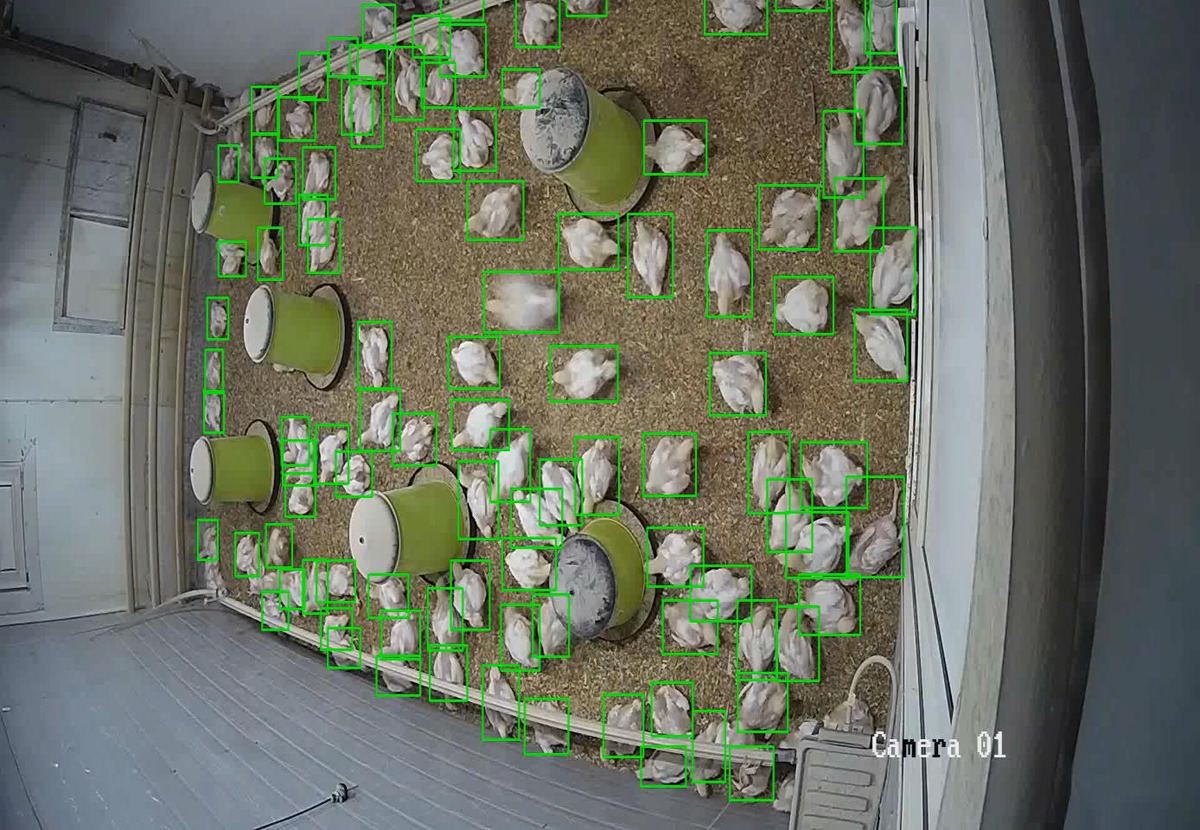
Detection of individual broiler chicks in an experimental pen (overhead wide-angle camera)
Behavioural and welfare indicators under study:
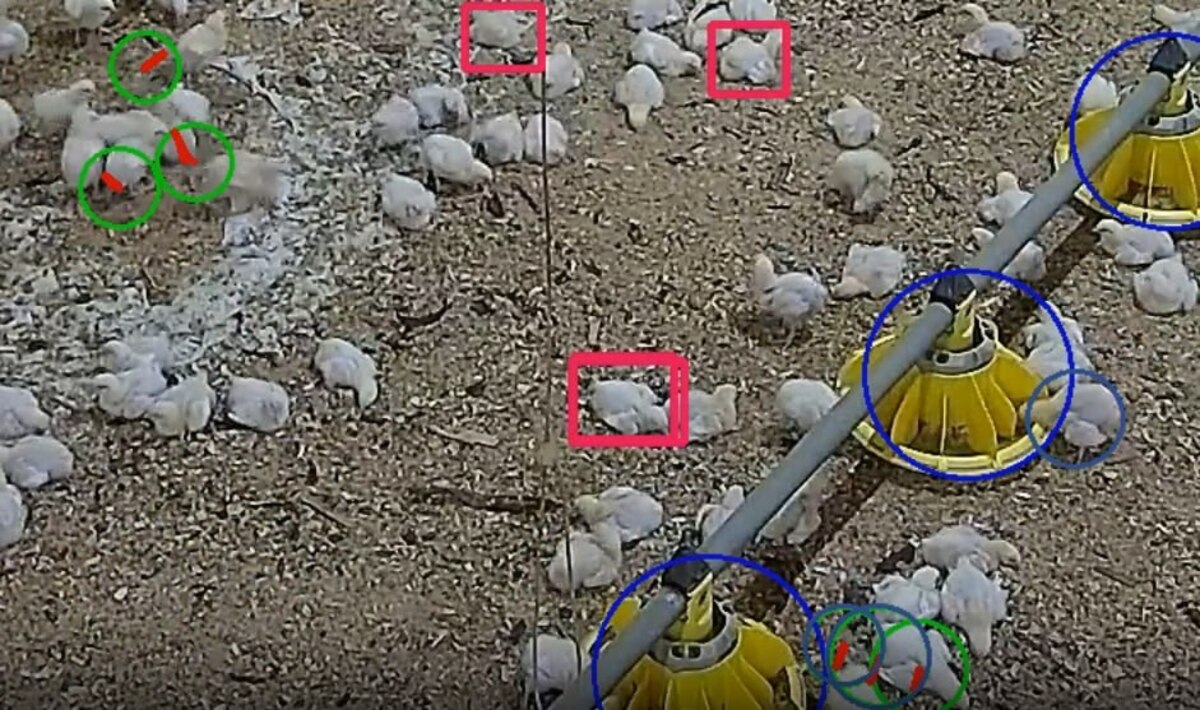
Commercial poultry house: feeders (blue), immobile birds (red) and interacting birds (green)
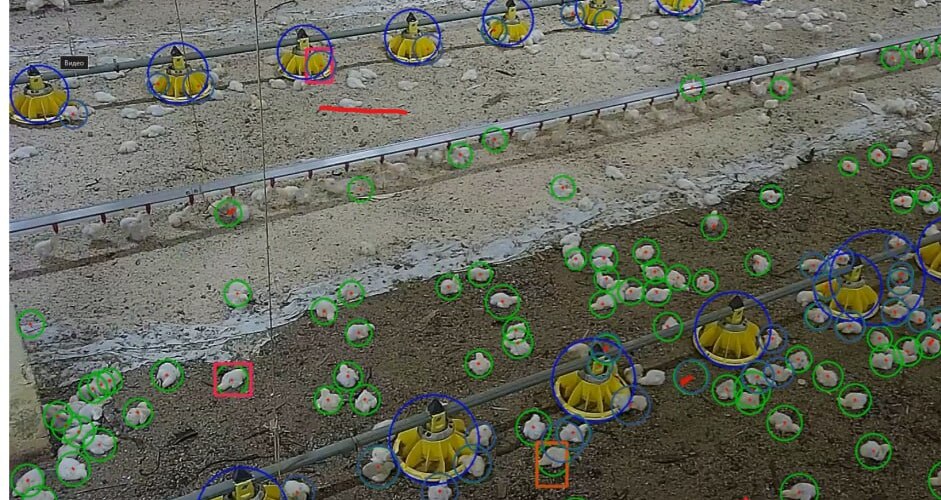
Wide view of a commercial poultry house: feeder lines (blue circles), individual birds (green), immobile birds (red and orange markers)
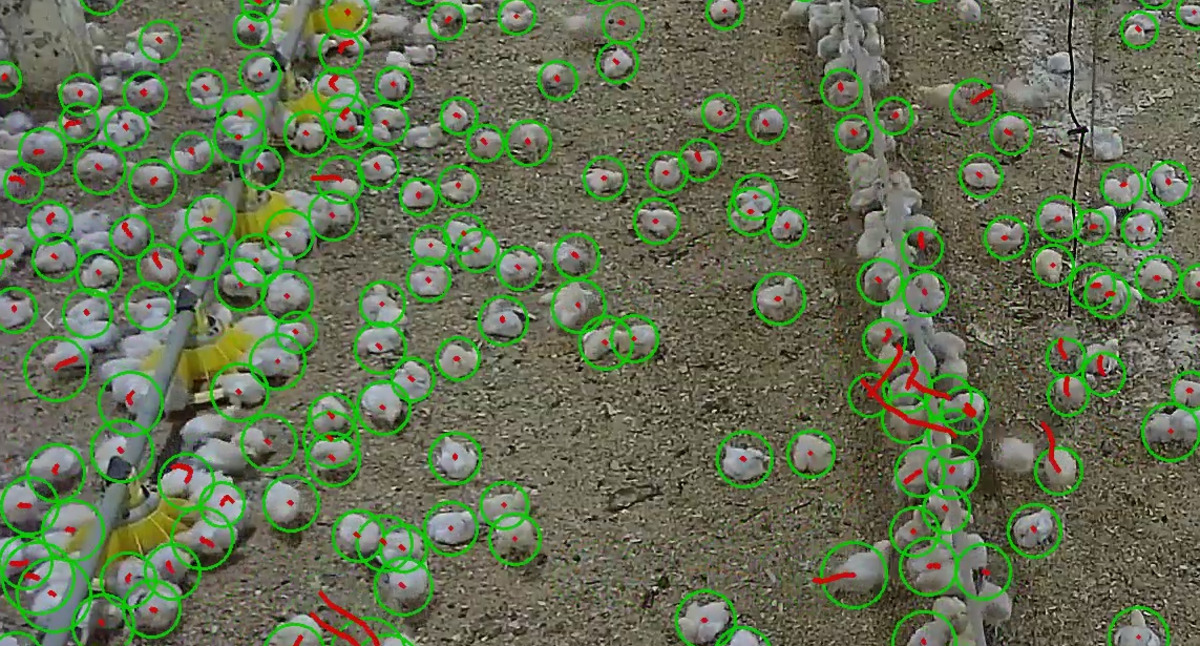
Dense-flock detection in a commercial poultry house
In a research vivarium, the same indicators may support the assessment of new feeds, vitamin supplements and vaccines. Continuous recording over the whole life cycle can capture behavioural changes that fall outside the scope of periodic human observation.
Of the indicators listed above, body weight estimation has reached the stage of a working prototype. Poultry Guard estimates the average weight of a broiler flock continuously from routine video, without catching or weighing the birds.
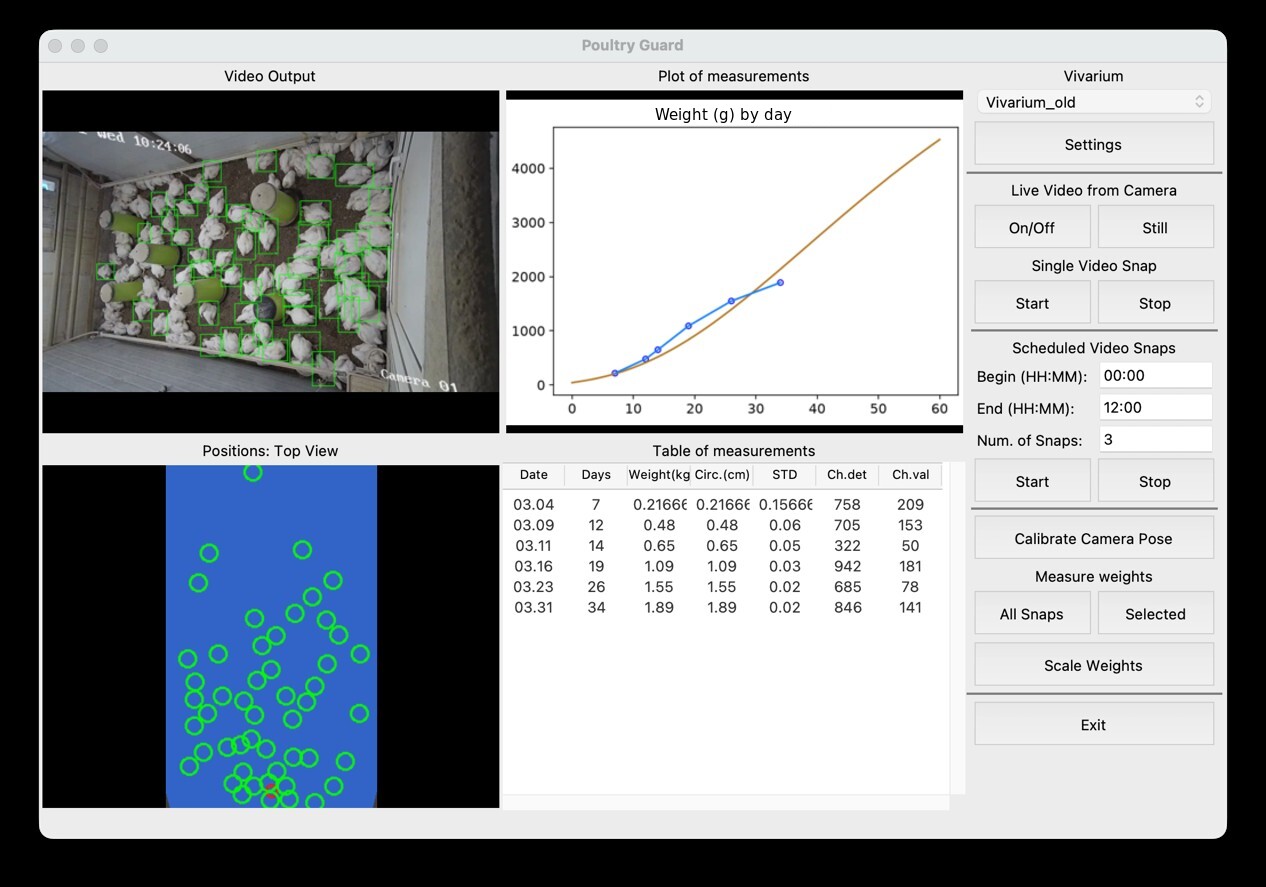
Prototype interface: detected birds, top-view positions, growth curve against the target, measurement table and camera controls
The prototype's accuracy under real operating conditions is the next question to be answered. The intended validation design covers one poultry house or experimental unit over a growth cycle. It includes camera set-up and geometric calibration, automatic video measurements, periodic reference weighing, and a final comparison of video-based estimates with the reference data.
In equine management, two conditions are of particular concern: colic and lameness. Both are treated more successfully when recognised early, yet their initial signs are subtle and may go unnoticed between routine checks. Three related monitoring concepts are of interest.
A camera installed in the stall can provide a structured record of the horse's day, presented to the owner or stable manager through a user application:
The veterinary literature describes a set of behavioural signs associated with the onset of colic. A system that first learns the individual horse's normal behaviour could flag deviations such as:
This concept can share hardware with stall monitoring.
Stall monitoring and colic detection both rely on a common layer: classification of the horse's postures and actions from video. Two levels are distinguished:
Several of the complex actions coincide with the behavioural signs of colic listed above, so a general action classifier can serve as the basis for condition-specific detectors.
A high-resolution camera records the horse in motion, for example during dressage work. Skeletal keypoints are then estimated and tracked to derive biomechanical parameters of each stride:
Asymmetries in these parameters between limbs are potential indicators of lameness.
In zoological collections, video analytics can support keepers' visual supervision of animals, especially outside working hours. One direction of interest concerns open-air enclosures of large raptors, such as Old World vultures and sea eagles. Here the aim is to detect emergencies and early signs of deteriorating condition.
Situations considered for detection:
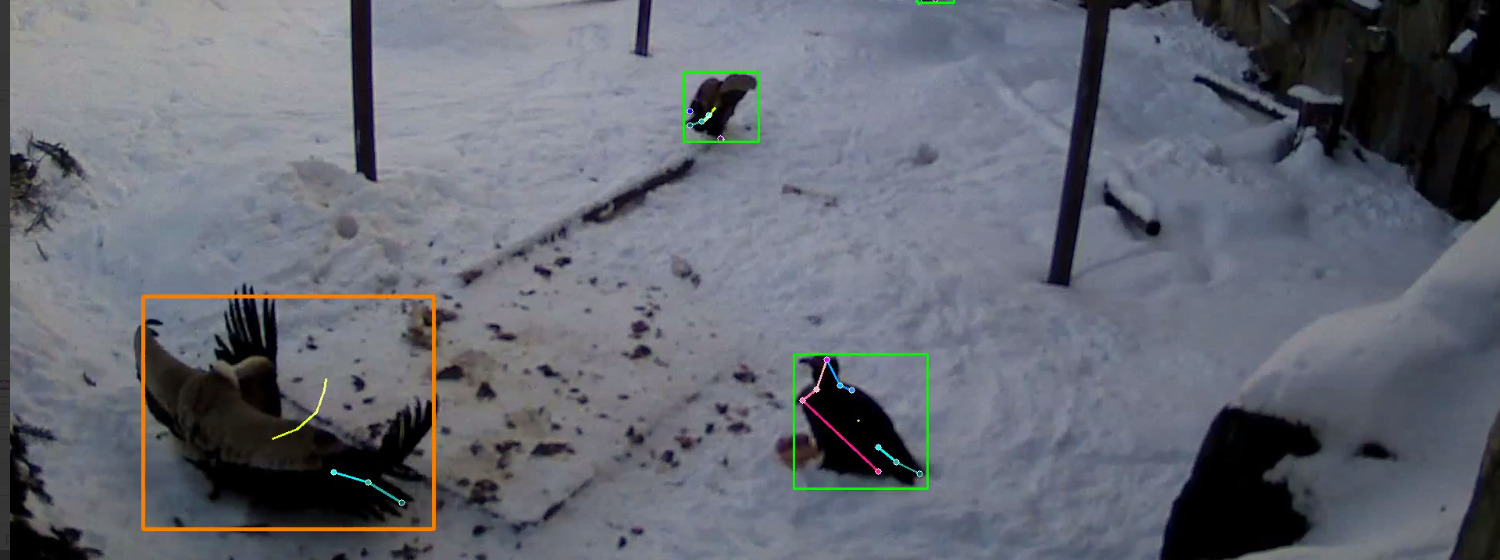
Detection of an aggressive interaction between two birds (orange frame) with pose lines
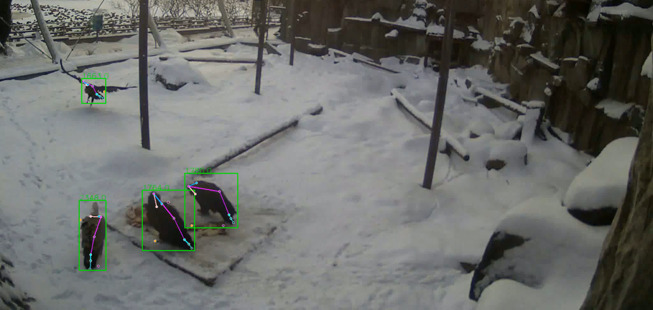
Bird detection and pose estimation in an outdoor enclosure under winter conditions
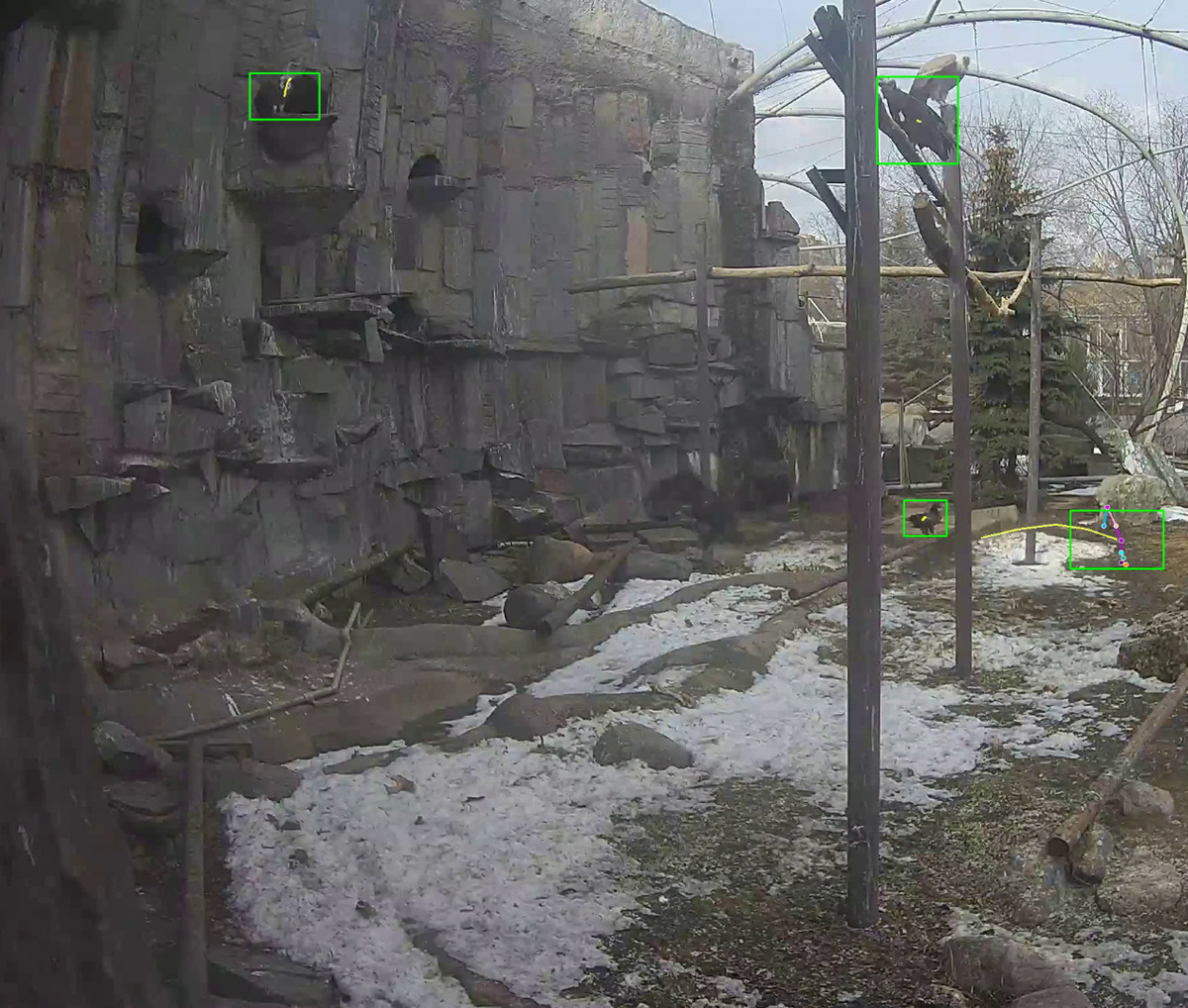
Spring conditions: birds detected in rock-wall niches, on perches and on the ground, with pose lines on a walking bird
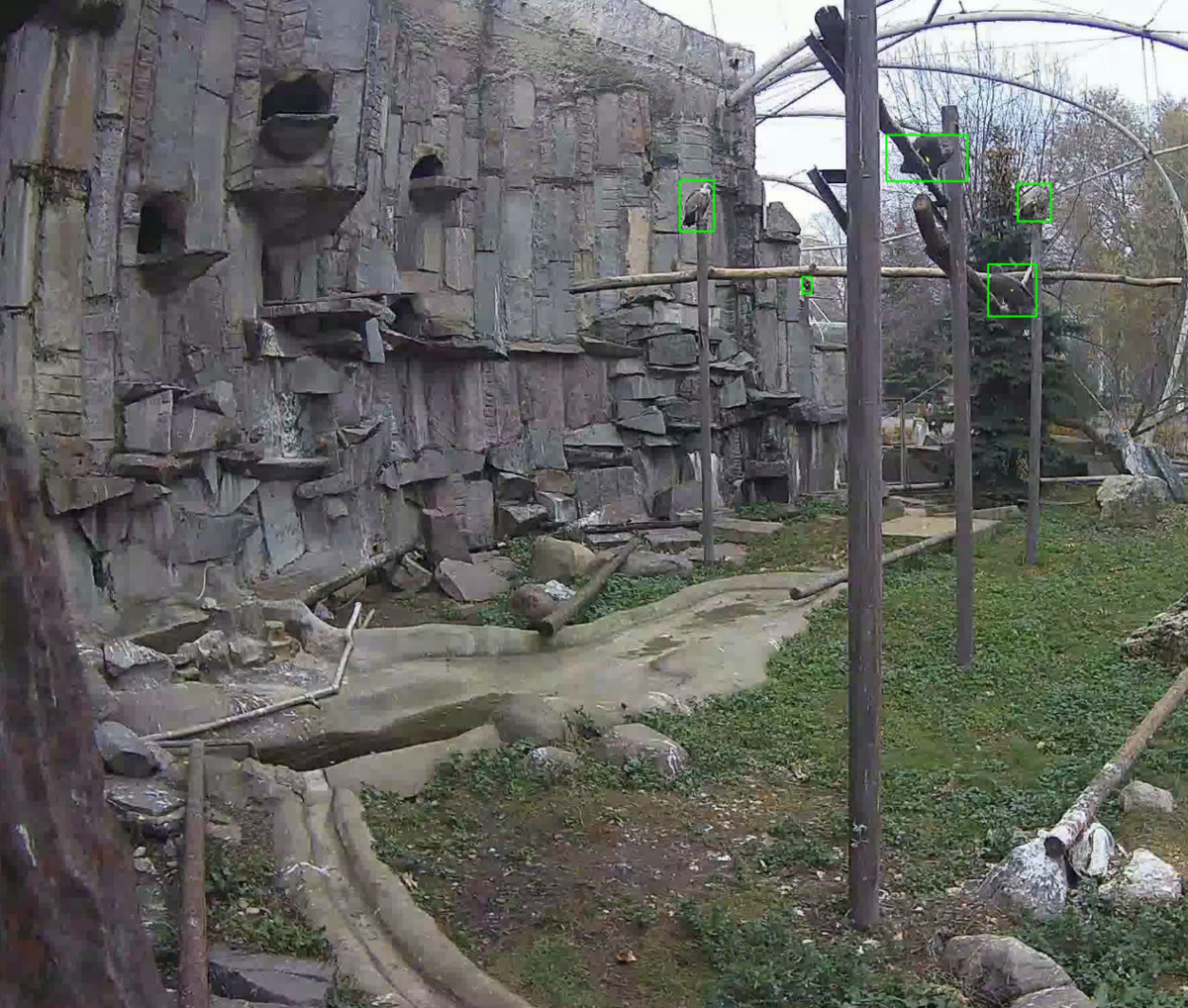
Summer conditions: detection of birds on perches and ledges
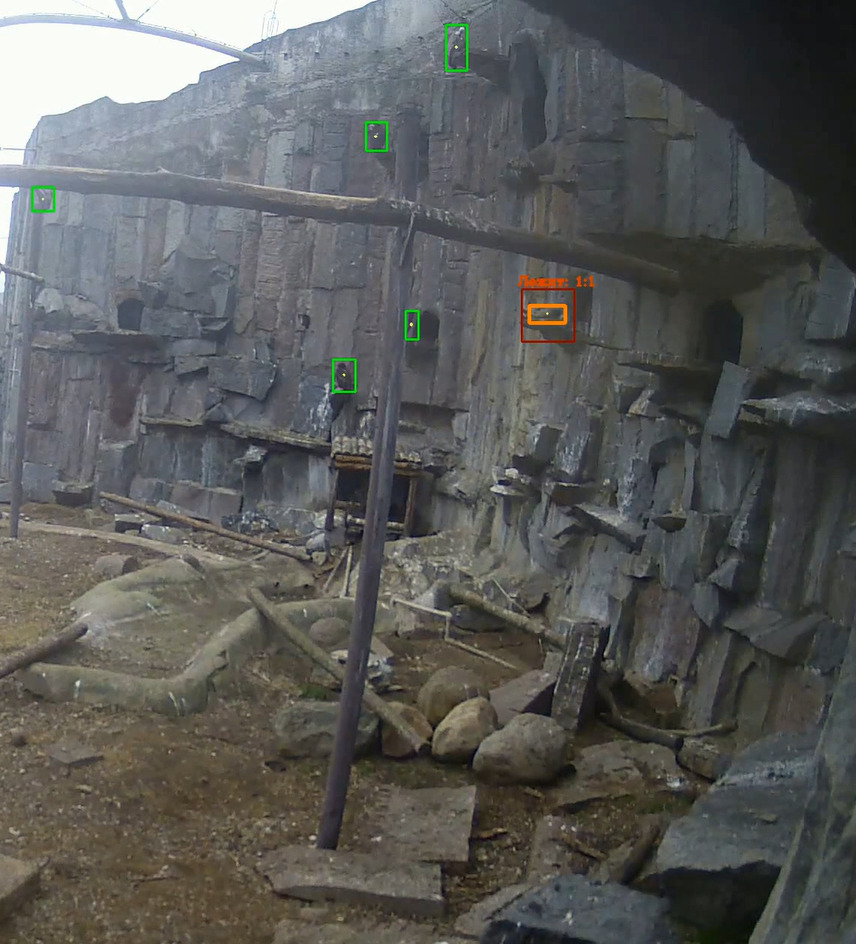
Small-scale detection of birds on a rock wall; the orange frame marks a bird classified as lying
In pig production, the tasks of interest are mainly zootechnical:
Several methodological issues are common to these directions and remain open questions: